Monday, October 18, 2010

Need a Houston Personal Trainer? Save Money with Today's Facebook SPECIAL!


THE SMART WAY TO FIND A PERSONAL TRAINER IN HOUSTON - AT A PRICE YOU CAN AFFORD!

Get Started with Ron at The Body Master Studio.
Sign up below for just $49 for 3 Personal Training Sessions.
That's a $150 Value!



Monday, February 22, 2010

Working Out the Bugs


Colds can strike at any time. Wintertime, late spring, early fall. It doesn’t matter.

These nasty bugs can disrupt your schedule and linger for weeks at a time, making it difficult if not impossible, to stick to an exercise program.

And then there's the question of whether you should be exercising at all, or if you should just ride out the worst of it and resume your workouts once the cold has passed.

New research may help make that decision a bit easier. Scientists at Ball State University in Muncie, Ind., gave 50 healthy students ages 19 to 29 an upper-respiratory virus.

Sixteen students were instructed to remain as sedentary as possible while the remaining 34 exercised moderately for 40 minutes per day.

Both groups were told not to take any cold medications.

After 10 days, researchers found no differences in the duration or severity of symptoms between the two groups. While the exercise didn’t speed up recovery, it didn’t slow it down either.

Previous studies have found that regular, moderate exercise is effective for reducing one's risk of catching a cold.

With these new findings, it appears the best medicine may be to continue exercising moderately while the cold runs its course.

Source: Medicine & Science in Sports & Exercise, November 1998


Start Now by calling right now or Register for your FREE Complimentary Session.

P.S. Don’t let the next 12 months be the same as the last 12 months. Do something about it by registering now.
You CAN do this. Start your FREE Complimentary Session.

To Your Continued Success,

The Body Master


713-773-0077


South Braeswood @ Fondren Houston TX 77074

www.thebodymaster.com

Tuesday, January 26, 2010

Empty Calories


How much nutritional bang are you getting for the calories you take in?

The term "empty calories" refers to calories that have no nutritional value aside from providing energy. Not that energy is anything to sneeze at -- but if you're watching your weight and making food choices based on the number of calories, you might as well get as many "bonus" nutrients as you can -- protein, vitamins, minerals, and so on -- from the foods you choose.

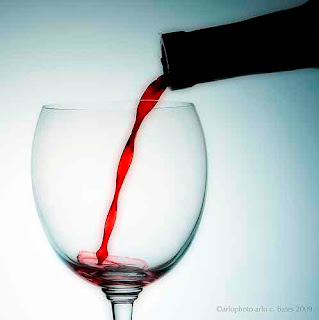
Easy example: compare a cup of milk to a can of (non-diet) soda or a glass of wine. They all provide about 130 calories of energy. But only the milk provides calcium, protein and other nutrients. The soda and wine have sugar or alcohol, but little else that nourishes your body.

The bottom line: eating well means you combat cravings -- that results in healthier eating habits over time.

Give me a call or stop by for more info:

The Body Master
713-773-0077
South Braeswood @ Fondren Houston TX 77074

www.thebodymaster.com


Saturday, January 23, 2010

Dealing with Back Pain


There are lots of great articles about back pain, but I'd like to take some time and delve into “where” the origin of the pain is in order to effectively understand it and therefore treat it.

As if lower back pain wasn't hard enough to get rid of, did you know that where you feel your pain probably isn't where the problem is (or the source of where your pain is?) All muscles in the human body have the ability to refer pain.

This means that when a muscle is injured, tight, in spasm or congested it will often cause pain far from where the problem is. And the muscles in the Lower Back are no exception and can certainly have complicated pain referral patterns that can confuse a lot of people, even trained healthcare professionals.

To make this simple, below is a list of common back pain problems so you can decide which fits you:

1.
Lower Back pain and stiffness after sitting or bending or going from sitting to standing especially along the lower spine and across the waistline-

Common causes: Hip flexor (muscles in the front of the hips) tightness, spasm or strain, especially in the Psoas muscle which attaches to all levels of the Lumbar Spine (lower back), including the intervertebral discs, and runs forward and down along the front portion of the pelvis to attach at the upper groin area. Also involved is the Iliacus muscle which attaches at the pelvis and runs forward and down along the front portion of the pelvis to attach next to the Psoas muscle at the upper groin area.

2.
Localized pain at the Sacroiliac joint (the bump you feel at the waistline just below your lower back) when you stand-

Common causes: the Gluteal (buttocks) area and front of hips. Tightness and or weakness in the Gluteals as well as Hip Flexor (front of hips) tightness/ spasm.

3.
Pain radiating down the outside or back of your leg when you stand-

Common causes: Piriformis muscle (a deep muscle located underneath the Gluteals) tightness and or spasm as well as Gluteal tightness, strain and overuse.

4.
Pain in Lower Back while you sit-

Common cause: Spasm of the lower back paraspinal muscles (the small stabilizing muscles along our spine.)

5.
Pain in buttocks area-

Common causes: Quadratus lumborum (a muscle that attaches to the top back portion of the pelvis and runs up along the spine and attaches to the lowest rib) muscle tightness and piriformis tightness.
_______
Now this is a small and partial list but it can give you an idea that where you "feel" the pain is not often where the problem is.

Once you can identify the true cause of your back pain, then the solutions are much more obvious. And your time spent trying to fix yourself is better utilized and more effective. Most often treatment for low back pain consists of exercises to help balance muscle imbalances. If the cause is understood, the exercises can be chosen correctly and performed correctly leading to a speedier recovery.

Sunday, January 17, 2010

Know Your Numbers


The straight facts on blood pressure and cholesterol #s:


Blood Pressure:

Your target should be:

  • Normal blood pressure is below 120/80.

  • Pre-hypertension is 120 to 139 (systolic) and/or 80 to 89 (diastolic).

  • Hypertension – also known as high blood pressure -- is 140 or higher (systolic) and 90 or higher (diastolic).


Cholesterol:

Here are the numbers to strive for:

  • Total cholesterol of 200 mg/dL or lower.

  • HDL ("good" cholesterol) of 50 mg/dL or higher, if you're a woman, or 40 mg/dL or higher, if you're a man.

  • Optimal LDL is 100 or lower, says Mosca. If you have other major risk factors, like pre-existing cardiovascular disease or diabetes, your doctor may want your LDL closer to 70.

  • Triglycerides of less than 150 mg/dL.


    The Body Master
    713-773-0077
    South Braeswood @ Fondren Houston TX 77074

    www.thebodymaster.com

Tuesday, January 12, 2010

Understanding BAD Cholesterol

This might sound a bit technical, but I think its important to understand some details behind your cholesterol to really grasp how to 'control' your cholesterol.

So what is the 'bad' cholesterol?

Low-density lipoproteins are considered as bad cholesterol which circulates throughout the blood streams and they slowly build up within the inner walls of the arteries that connect to the heart and brain. When these low density lipoproteins are combined with other substances, they often form plaque, which can be a thick and hard deposit that can narrow down arteries and make them less flexible. Along with the loss in flexibility, there is a loss in the flow of the blood. This condition is more commonly known as atherosclerosis. When a person is suffering from atherosclerosis, a clot can form and block the narrow arteries which can result in a stroke or even a heart attack.

The levels of low density lipoproteins are better when they are lower, the lower they are, the lower the risk of having a stroke or heart attack is. Overall, there are five categories that the levels fall into, optimal which is less than 100mg/dL, 100 to 129 mg/dL is considered as Near Optimal or Above Optimal, 130 to 159 mg/dL is considered to be Borderline High, 160 to 189 mg/dL is considered as having a High LDL Level, anything above 190 mg/dL falls under something that is Very High.

There are many other risk factors when it comes to heart disease and strokes which can help determine the LDL level of a person as well as give the person a proper and appropriate fitting treatment specifically just for them. A healthy level for one may not always be the same healthy for another friend or person. It is extremely important to be honest and open with your doctors and discuss all available treatments, the differences between levels, and the best plan that works for you overall.

There are many doctors that help profile your cholesterol level which may give you a great starting point as to learning about what you can do to prevent and treat yourself if your LDL cholesterol level is specifically high. Doctors can provide a report with information that you need to fully understand in order to maintain and manage your cholesterol level, the different health risks that may affect you and the available treatments that are open to you.

The Body Master
713-773-0077
South Braeswood @ Fondren Houston TX 77074

www.thebodymaster.com

Thursday, January 7, 2010

Awesome Video - Free Valuable Content - Check It Out!

I know you're working hard in the new year. This is a great video to keep you on track. Valuable content, free info, all yours! Just remember, Ron's your man. Enjoy!


The Body Master
713-773-0077

South Braeswood @ Fondren Houston TX 77074
www.thebodymaster.com